I. The Interweaving of Nature and Humanity: Reflections Under Ecological Crisis
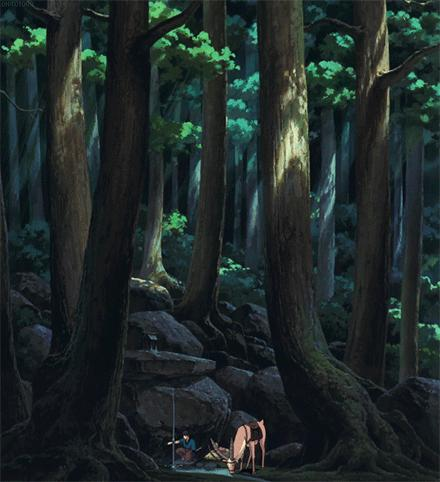
(1) The Sacredness of Nature and Human Greed In Ghibli films, nature is not merely a backdrop for the story, but a living, spiritual presence. “Princess Mononoke,” set in the Muromachi period, tells the story of how humans cut down forests and hunt down the Great Forest Spirit in the name of development, ultimately triggering nature’s retaliation. In the film, Lady Eboshi leads women discarded by mainstream society and people with leprosy to build a new home, developing ironworks to fend off samurai attacks. At its core, her exploitation of nature is for the survival of her people. Yet her actions disrupt the ecological balance of the forest, causing the conflict between the forest gods and humans to intensify. As the embodiment of nature, the Forest Spirit’s cycle of life and death is both destruction and rebirth, mirroring the eternal laws of ecological systems. When humans seize its head, the forest begins to wither and the land is plunged into darkness, symbolizing that humanity’s destruction of nature has reached its limit. Ashitaka, as a representative of humanity, understands both human struggles for survival and the power of nature. He seeks a fragile balance between the two. In the end, Ashitaka and San prevent further bloodshed between humans and the forest gods, the Forest Spirit regains its life, and the forest slowly returns to vitality.
(2) Harmonious Coexistence Between Humans and Nature
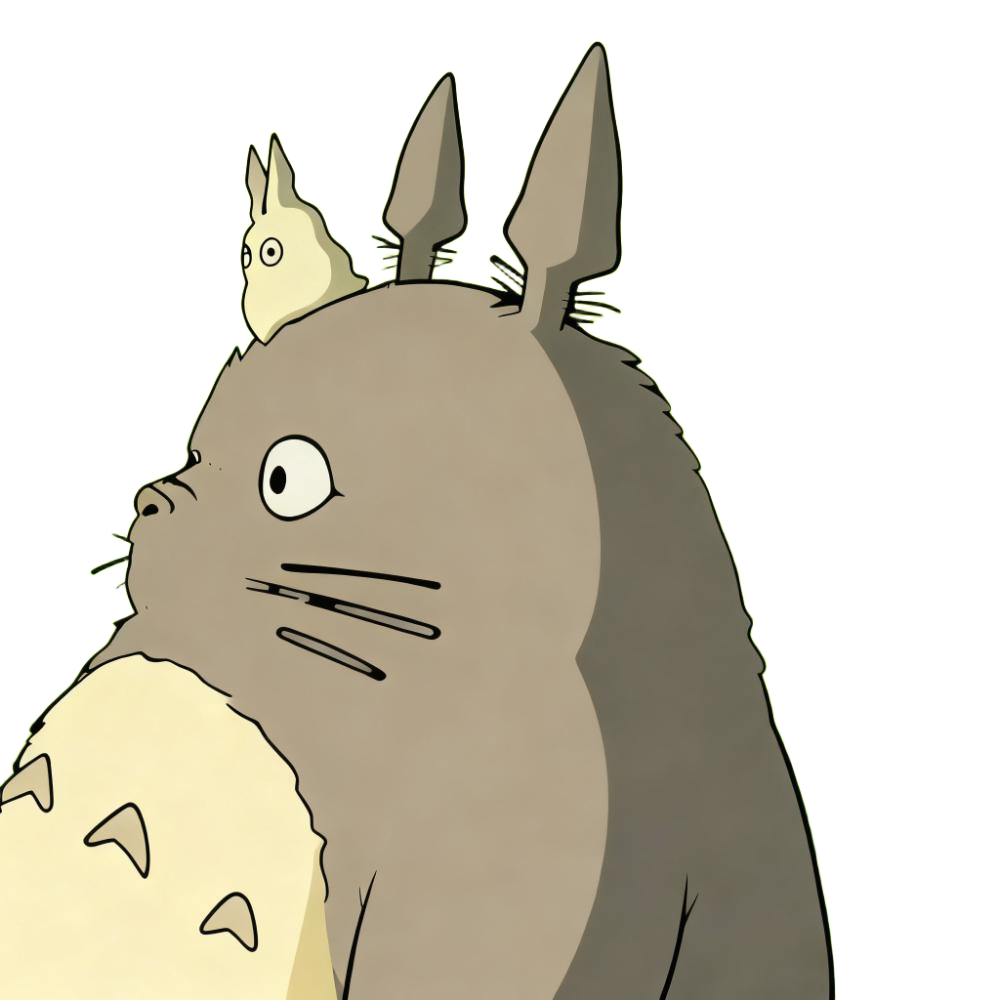
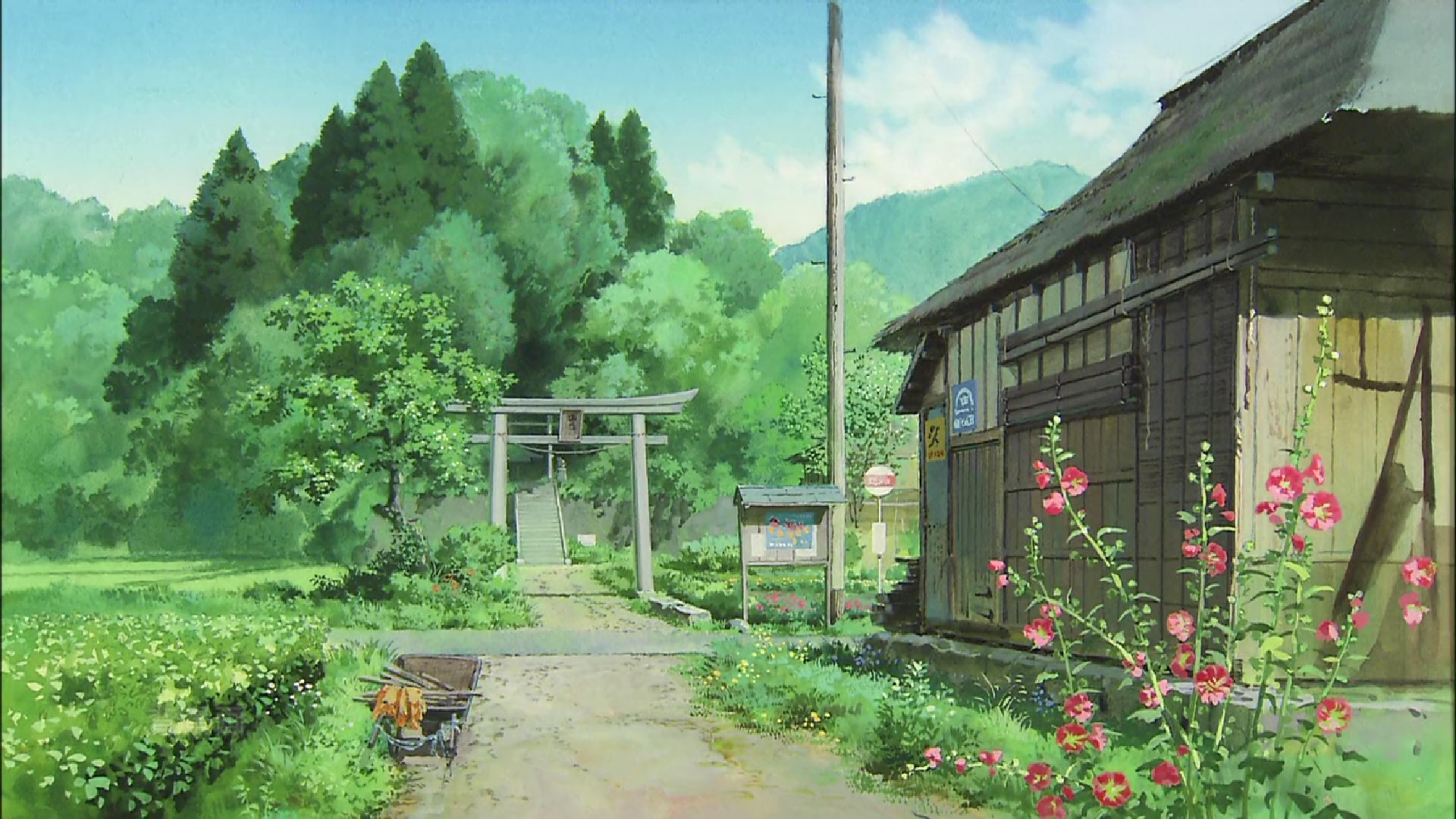
Ghibli films are also full of scenes that portray the harmonious coexistence of people and nature. “My Neighbor Totoro” tells the story of Tatsuo Kusakabe moving to the countryside with his two daughters, Satsuki and Mei, so they can be closer to their ailing mother. In this new environment, the sisters unexpectedly encounter the giant forest spirit Totoro and become friends with it. Totoro is not just a fantastic creature, but an incarnation of nature itself, presiding over the growth and rhythm of the forest. When Totoro stands beside Satsuki in the rain, when it uses its mysterious power to make seeds grow into a forest overnight, when the Catbus carries Satsuki across the fields in search of her missing sister—these moments all convey the warmth and beauty of the relationship between humans and nature. In the film, the lush forest is no longer a passive backdrop, but a conscious, breathing presence. Every leaf and every ray of light carefully drawn by Miyazaki expresses his reverence for the natural world. This ecological awareness is never preachy; it flows naturally through the children’s pure experiences of the world—Mei fearlessly napping on Totoro’s belly, Satsuki’s gratitude when she receives the forest’s mysterious help—all quietly suggest the harmonious relationship that ought to exist between humans and nature.
II. Growth and Redemption: Finding the Self in Adversity
(1) The Pain and Transformation of Growing Up
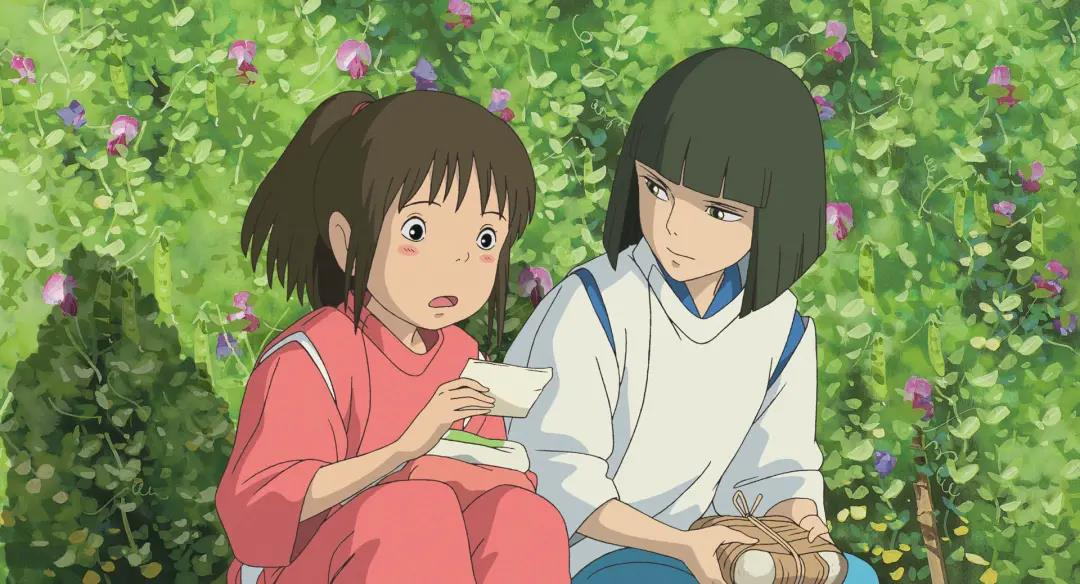
Growth is an eternal theme in Ghibli’s works. “Spirited Away” tells the story of Chihiro, who stumbles into the spirit world while moving with her parents, only to see them turned into pigs for their greed. To save them, she works at the bathhouse and, through a series of trials, gradually matures and rediscovers herself. Chihiro starts out as a spoiled, timid girl, but in the spirit world she is forced to face hardship and danger head-on. Working at the bathhouse, she grows from a complete novice into a capable worker. She helps cleanse a polluted river spirit and restores its power; she helps No-Face recover his sense of self so that he is no longer lost in the whirlpool of desire; she also helps Haku remember his true name, completing a mutual act of redemption. Through this journey, Chihiro becomes strong, brave, and kind, and in the process she reclaims her own name and identity.
(2) The Power and Hope of Redemption Redemption is another crucial theme in Ghibli’s films. “Castle in the Sky” follows Pazu, an orphan determined to fulfill his late father’s wish to find the legendary floating island, Laputa. Together with the mysterious girl Sheeta, he confronts the military and other forces, undergoing a transformation from naïveté to maturity through their adventures. Laputa possesses a highly advanced technological civilization but ultimately collapses for violating the laws of nature. On their journey in search of Laputa, Pazu and Sheeta not only uncover the secrets of the island but also discover their own value and purpose. Through their actions, they prevent the military from exploiting Laputa and allow the island to return to nature. In the film, the destruction of Laputa symbolizes the disaster that unchecked technological ambition can bring, while the choices of Pazu and Sheeta embody humanity’s hope and future.
III. War and Peace: Reflections on the Fate of Humankind
(1) The Cruelty and Trauma of War War is a heavy, recurring subject in Ghibli’s animation. “Grave of the Fireflies,” set in Japan at the end of World War II, tells the story of a brother and sister who lose their home and family in the war and ultimately die tragically. The film lays bare both the brutality of war and the coldness of human indifference. Seita and his younger sister Setsuko lose their mother in an air raid and are forced to leave their home and wander. They live in a cave, surviving on wild plants and stolen food. Under the shadow of war, life becomes increasingly desperate: Setsuko eventually dies of malnutrition, and Seita too falls into hopelessness and death. The film does not romanticize war in any way; instead, it presents the pain and trauma it inflicts with stark honesty. It compels us to question the meaning and value of war, and to cherish how hard-won peace truly is.
(2) The Longing for and Pursuit of Peace Although Ghibli’s films sharply criticize war, they also convey a deep longing for and pursuit of peace. “Porco Rosso,” set in post–World War I Italy, tells the story of Porco, a former ace pilot cursed to live in the form of a pig. Having witnessed too much death and destruction during the war, Porco has grown sickened and disillusioned with conflict. He leaves the military and becomes a bounty hunter. In his battles with air pirates, he meets a young female mechanic and pilot, Fio. Her courage and kindness help Porco regain his faith in life and his inner strength. In the end, Porco and Fio defeat the air pirates together and protect peace over the Adriatic Sea. Porco’s character symbolizes those who have lost faith and hope amid war, while his transformation embodies humanity’s deep-seated desire for and pursuit of peace.
IV. Profound Relevance to the Real World
Ghibli’s animated films are not just entertainment; they are also reflections on and critiques of real-world society. Through fantastical stories and vivid imagery, they expose issues such as ecological crises, war, and the greed and indifference that exist within human nature. At the same time, they express a longing for a better future—for harmonious coexistence between humans and nature, for peace, and for love. While enjoying these works as art, we are also invited to reflect on our own lives and on the direction of social development. Ghibli’s films are like beacons, illuminating the path ahead and filling us with hope for what lies beyond.